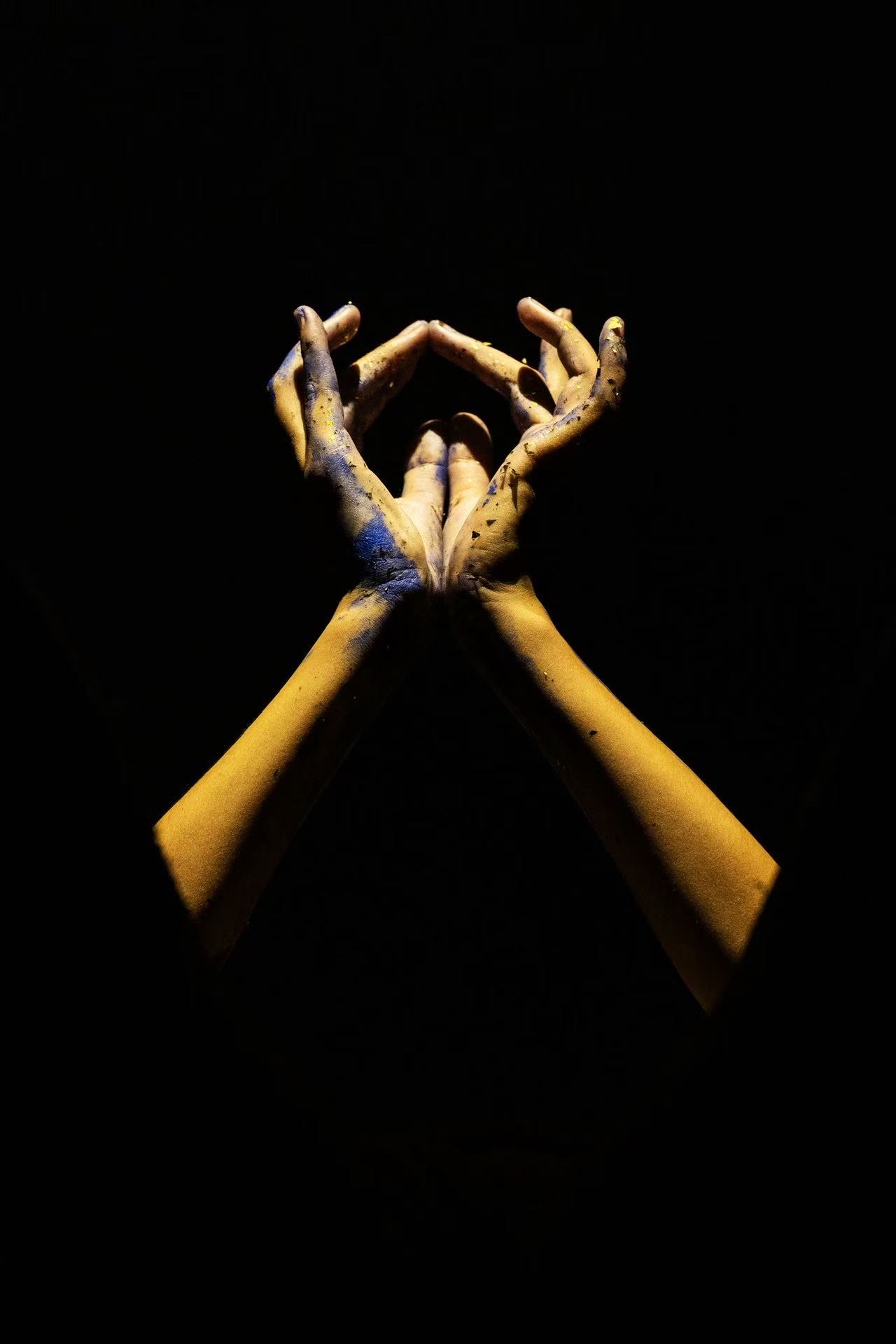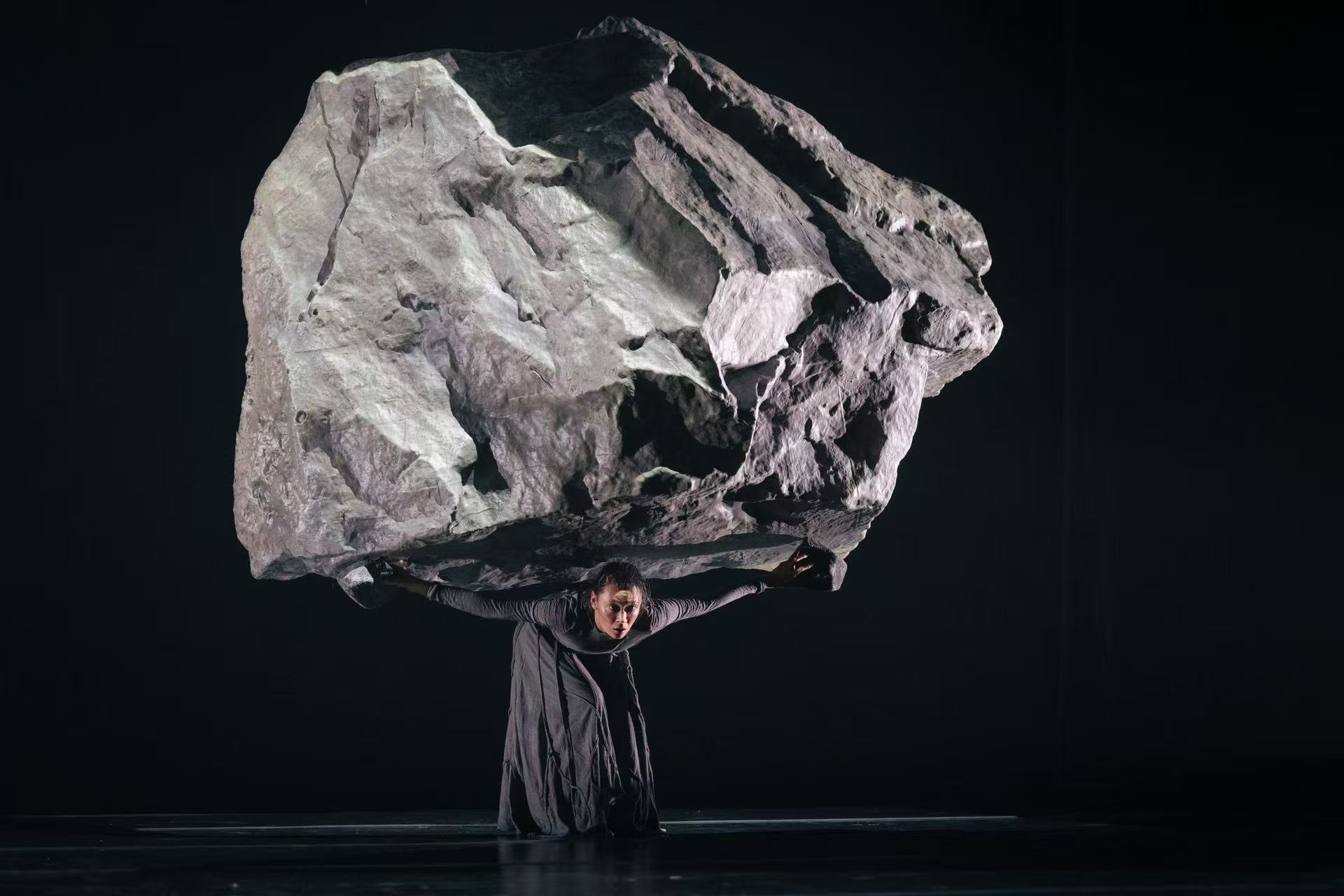
Stone image and stage figure from A Yang Bai
01 / A Yang Bai

A Yang Bai

Stone. Time. Mother. A place to belong.

1

Creative Background

A Yang Bai is first of all a modern dance work. It is not a reconstruction of Bai imagery, folk ritual, or intangible-heritage material, nor does it place tradition on stage as decoration. What Dong Jilan is working through is the question of a modern dancer's body: after leaving home, after professional training and international stage experience, how does the body face its origin, mother, land, and lived memory again?

The cultural source of A Yang Bai is connected to Cave 8 of the Shibaoshan grottoes in Jianchuan, Yunnan, and to ideas of women, gestation, and the origin of life. In this work, however, these sources are not presented as historical explanation or fixed ethnic symbols. They enter the structure of modern dance as weight, breath, pause, sinking, resistance, approach, and return.

The great stone at the center of the stage is the work's most important bodily object. It is not scenery, but a presence that continually changes the dancer's relation to her body. The silence, hardness, and sense of time carried by stone become weight and resistance inside the body. The dancer circles it, bears it, approaches it, and is shaped by it in return. The work therefore moves from "speaking about origin" toward "experiencing origin through the body."

The mother's voice is also not background music. Dong Jilan's mother, Zhang Fumei, is an inheritor of Bai folk singing, and her singing brings life, labor, and local memory into the theatre. When the modern dancing body meets the mother's voice, tradition is not material pasted onto dance. It becomes the living site to which the dancer responds: on one side, a voice handed down by the mother; on the other, a body shaped by training, movement through the world, and creation.

For this reason, the "search for roots" in A Yang Bai is not a return to a stable folk label, nor a romanticization of the countryside. It is closer to a self-questioning within modern dance: why does the body move this way? Which memories have settled into muscle, bone, and breath? How can a dancer who has moved from village to world stage hear mother, stone, and land again through contemporary body language?

This is the central creative background of A Yang Bai: it uses modern dance as its method, and draws from the mother's voice, the temporality of stone, and personal life experience. What the work finally presents is not "how tradition is displayed," but how a modern body enters into relation with its own origin again.
2

Sound, Mother, and Body

The most powerful relation in A Yang Bai is the relation between mother and daughter. The work does not tell a mother-daughter story through dramatic plot. Instead, it lets voice and body be present at the same time: the mother's singing keeps the lived texture of Bai folk song, while Dong Jilan's body receives, answers, resists, and comes close. What the audience sees is not only two generations of women on one stage, but two kinds of time sharing one stage.

The mother's voice comes from labor, song gatherings, mountain fields, and daily life. It does not begin from theatre technique, yet it naturally carries the tone of its place. Dong Jilan's body comes from professional training, stage experience, and contemporary dance language. It can become abstract, transform, and hide feeling inside muscle, joints, and breath. When the two meet, the work does not need to explain how tradition becomes contemporary, because the contemporary body has always grown from traditional life.

This is also what separates A Yang Bai from many works that use intangible-heritage elements. It does not paste Bai folk singing onto modern dance as material. It lets sound become part of the structure of the work. The mother's voice is like a thread that draws the dancer back to home, to female experience, and to the place where life was first called. Dance does not explain the voice, and the voice does not simply create atmosphere for dance. Together they form the living site of the work.

3

Stage Presentation

The great stone on stage is the central image of the work. It is like a mountain, a relic, a womb, and a silent spirit. Dong Jilan's body unfolds around it: sometimes close to it, sometimes drawn by it, sometimes as if trying to break away, and sometimes as if returning to its shadow. The stillness of stone and the movement of the body create a contrast, allowing "time" to become not only a written concept but a weight that can be felt on stage.

The movement language of the work does not seek spectacle. It is closer to a sustained act of questioning: arms, spine, shoulders and back, kneeling, winding, looking upward, sinking down. These movements seem slowly excavated from inside the body. Dong Jilan is not displaying technique. She is letting the body carry something deeper than technique. The quieter the body becomes, the clearer the vibration inside it. The more restrained the movement, the less easily the force of life is consumed.

A Yang Bai also keeps a sense of ritual space, but this ritual is not a grand religious narrative. It grows from relations between human and nature, human and mother, human and the place of origin. Light, sound, stone, and dancer form a field that slowly opens. The audience is led into a space that is not in a hurry to provide answers, a space where the echoes among mother, land, and body can be heard again.

4

From Roots to Belonging

Dong Jilan's search for roots is not a return to a fixed folk label. It is a continuous question about where bodily experience comes from. She came out of Shilong Village in Dali, experienced the training and role-building of Yang Liping's productions, and then moved through international collaboration and personal creation. The further outward she goes, the more she needs to confirm whether the earliest thing inside her body is still there. A Yang Bai is that confirmation.

The work does not answer the question "What is Bai culture?" It asks instead, "How does a Bai daughter understand her own life today?" It brings the stars, earth, mountains, pine trees, stones, wind, and laboring people of home into the theatre. It does so not to produce local color, but to let the audience feel that the human body is never isolated. It is always shaped by land, family, nature, and time.

This is why A Yang Bai finally carries a quality that is both ancient and contemporary. Its source is ancient, coming from grottoes, motherhood, and reverence for nature. Its method is contemporary, coming from dance theatre, body language, and modern stage composition. Its emotion is direct, pointing toward questions everyone faces: where life comes from, how love is passed on, and how a person can move forward while carrying their roots.

5

Realized Outcome

A Yang Bai was selected for the commissioned-creation section of the 8th Young Choreographers Program of China Dancers Association and made its world premiere at Shanghai International Dance Center on November 26, 2024. The work runs for about sixty minutes without intermission. It is produced by Naweiyanglan Culture Communication and Development Co., Ltd. and co-produced by China Dancers Association.

Based on the existing materials, A Yang Bai has already formed a complete work system: theatre performances, trailer, stage photographs, posters, creative statement, and programme. It is not only a stage project from one period. It also marks an important turn in Dong Jilan's creative line: from "dancing out of tradition" toward "entering life again while carrying tradition."

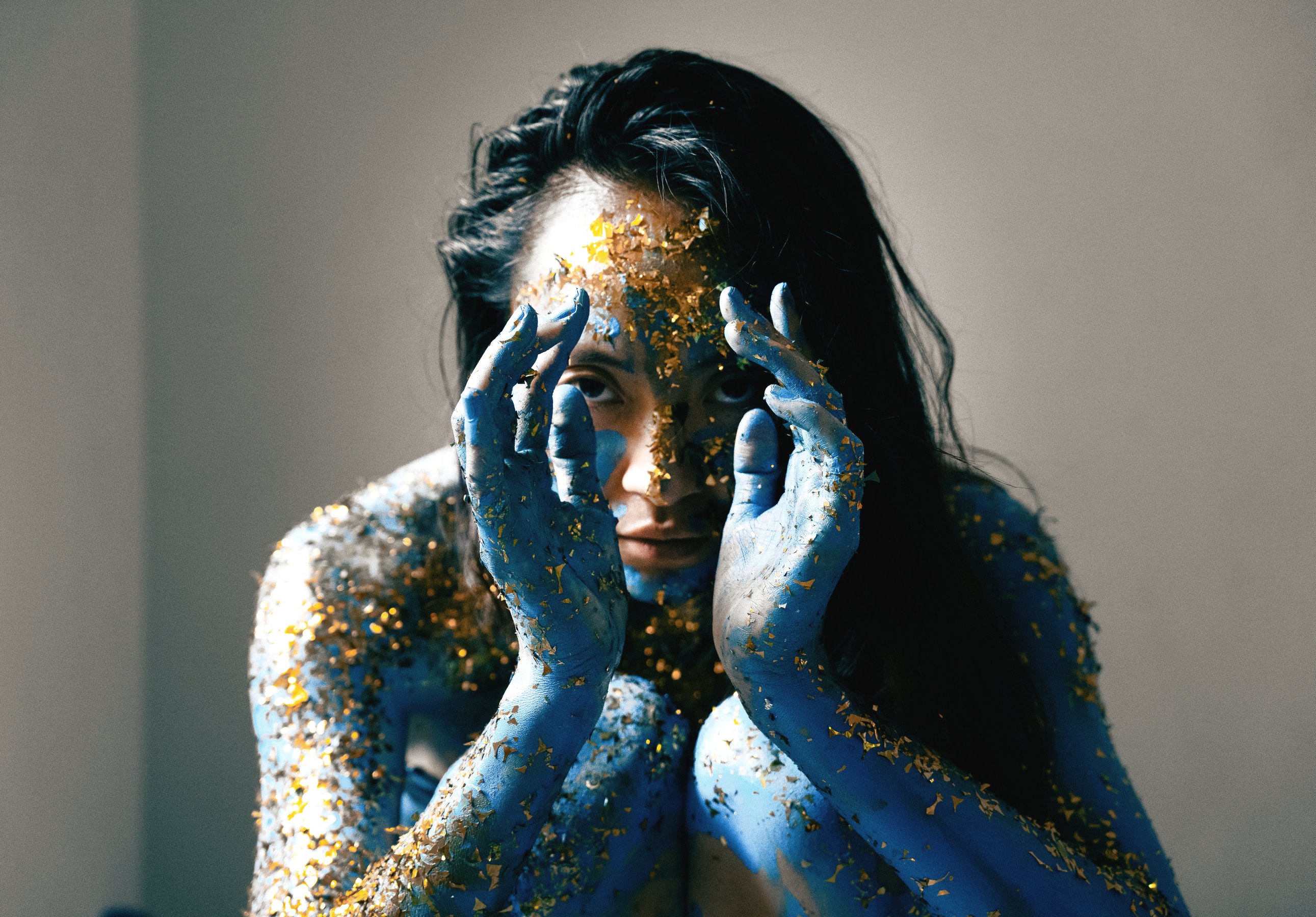
Blue body and gold-leaf portrait from A Yang Bai
body / origin
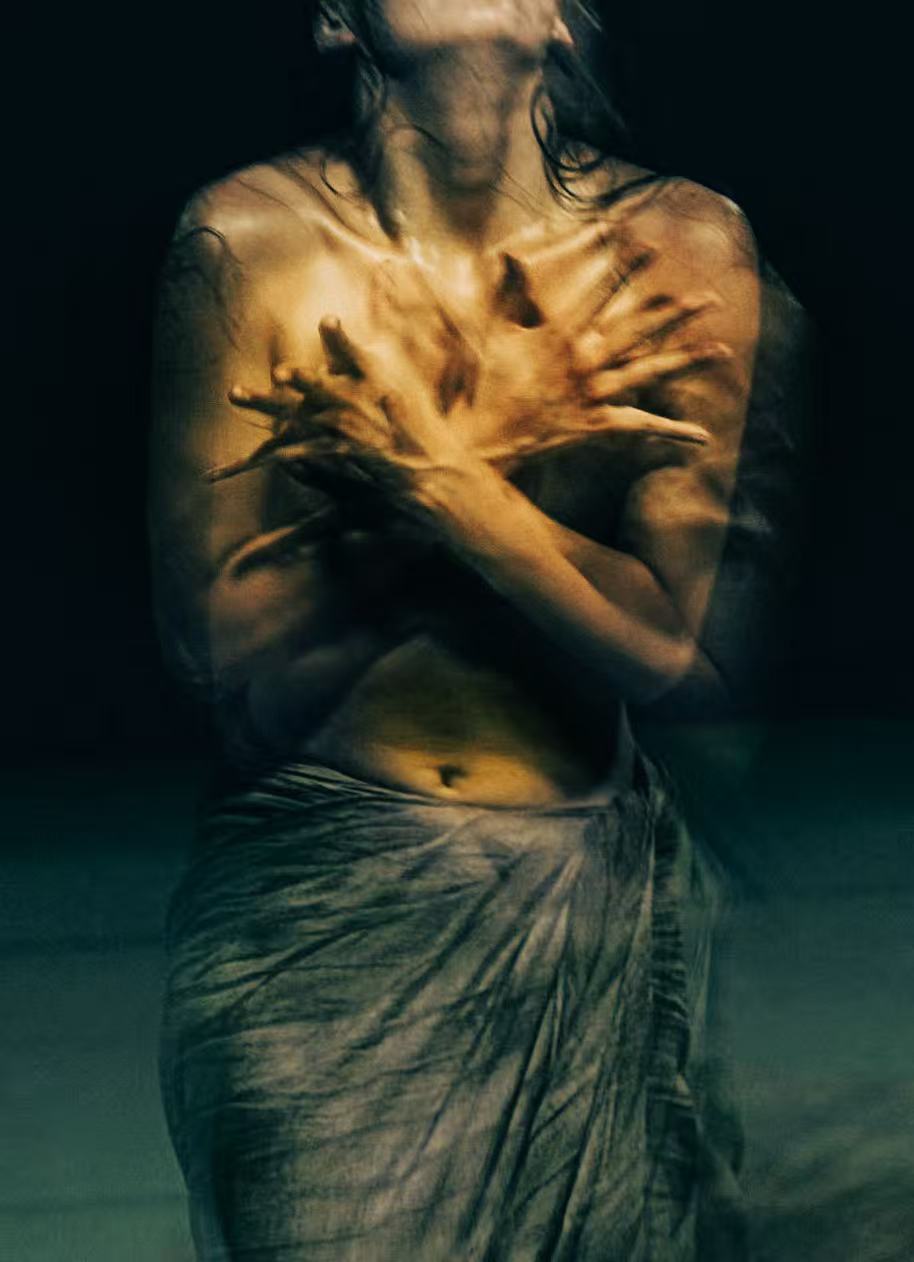
Body image in gold motion blur
golden trace
Close view of overlapping hands against black
hands / memory