Creative Background
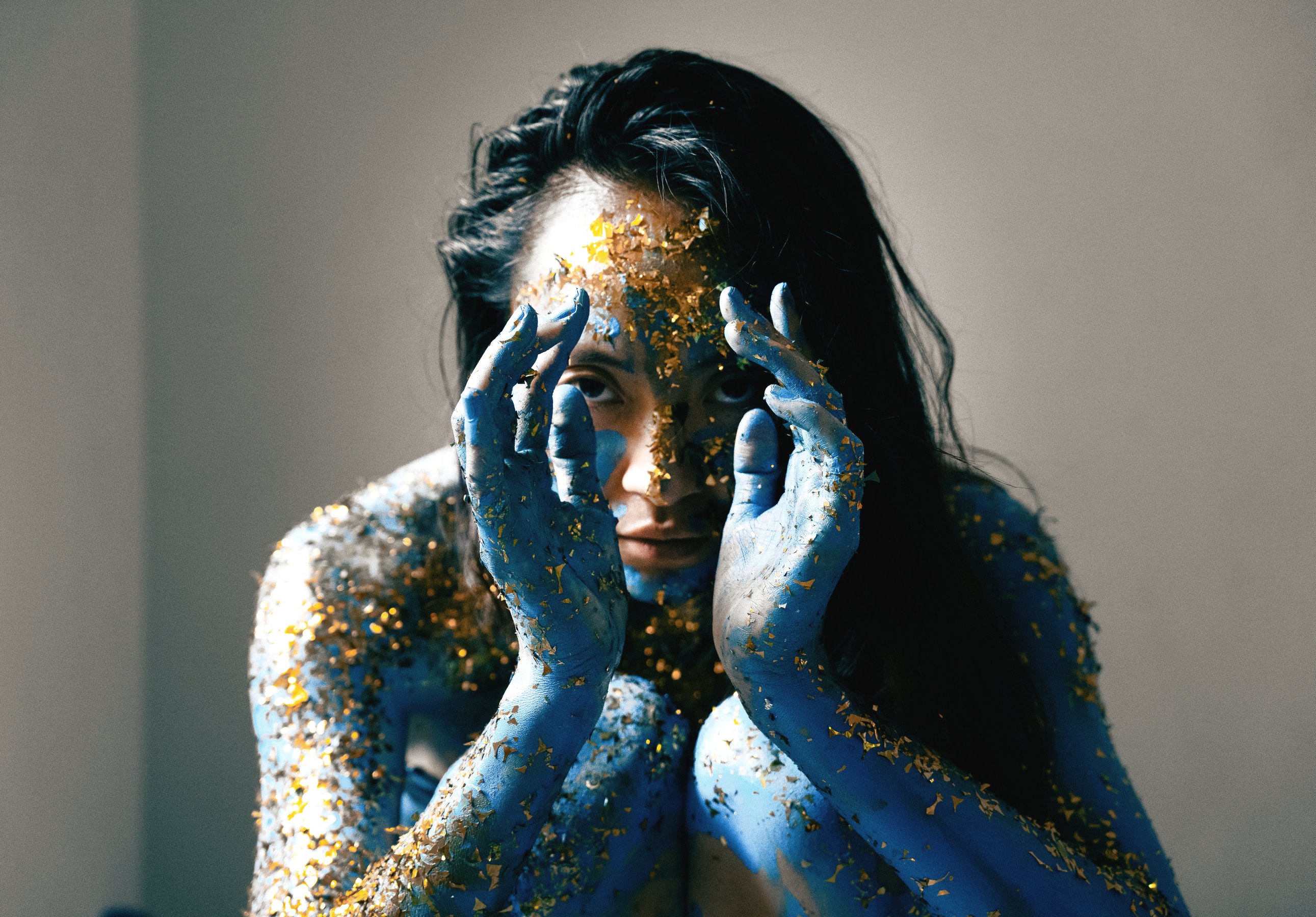
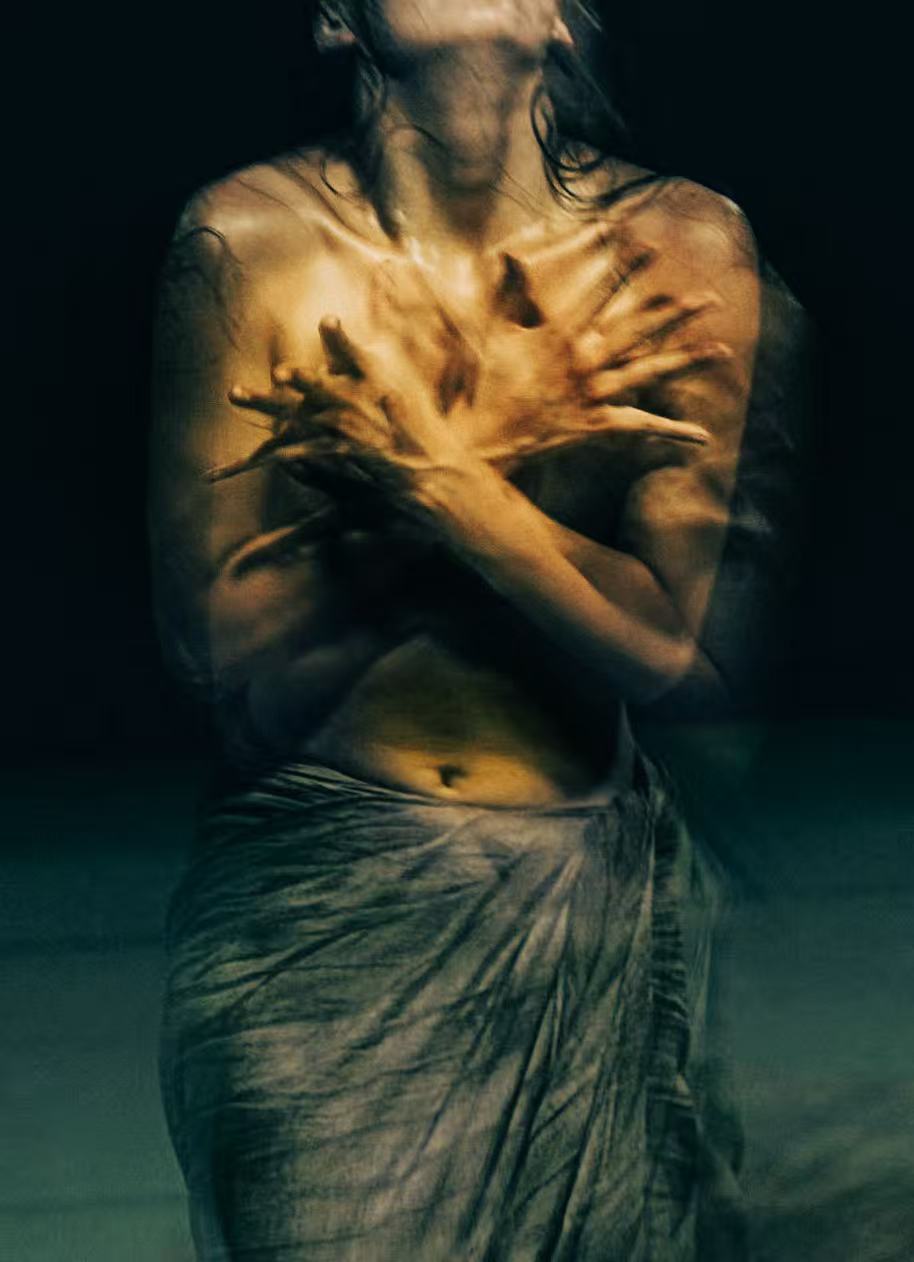
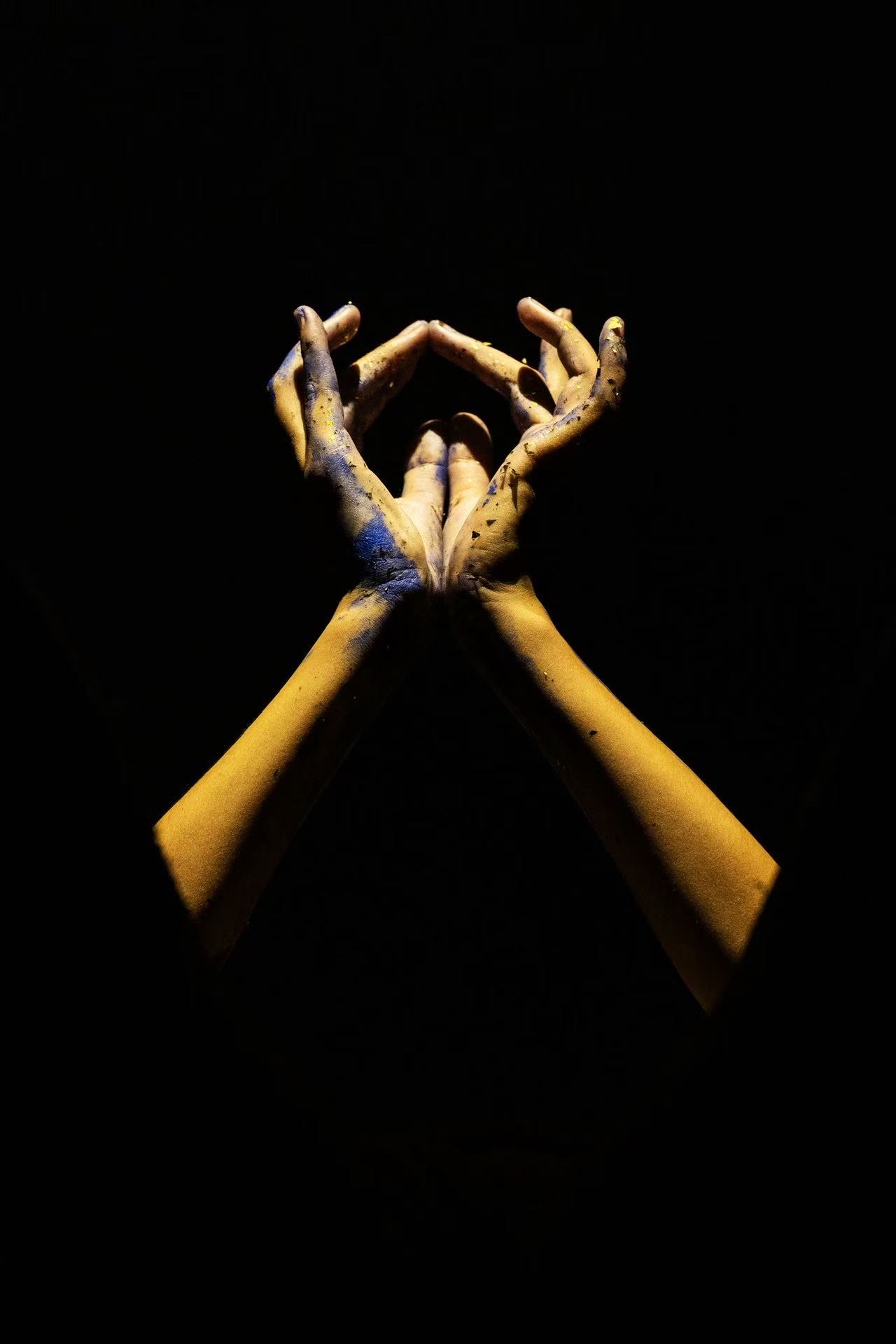
A Yang Bai is first of all a modern dance work. It is not a reconstruction of Bai imagery, folk ritual, or intangible-heritage material, nor does it place tradition on stage as decoration. What Dong Jilan is working through is the question of a modern dancer's body: after leaving home, after professional training and international stage experience, how does the body face its origin, mother, land, and lived memory again?
The cultural source of A Yang Bai is connected to Cave 8 of the Shibaoshan grottoes in Jianchuan, Yunnan, and to ideas of women, gestation, and the origin of life. In this work, however, these sources are not presented as historical explanation or fixed ethnic symbols. They enter the structure of modern dance as weight, breath, pause, sinking, resistance, approach, and return.
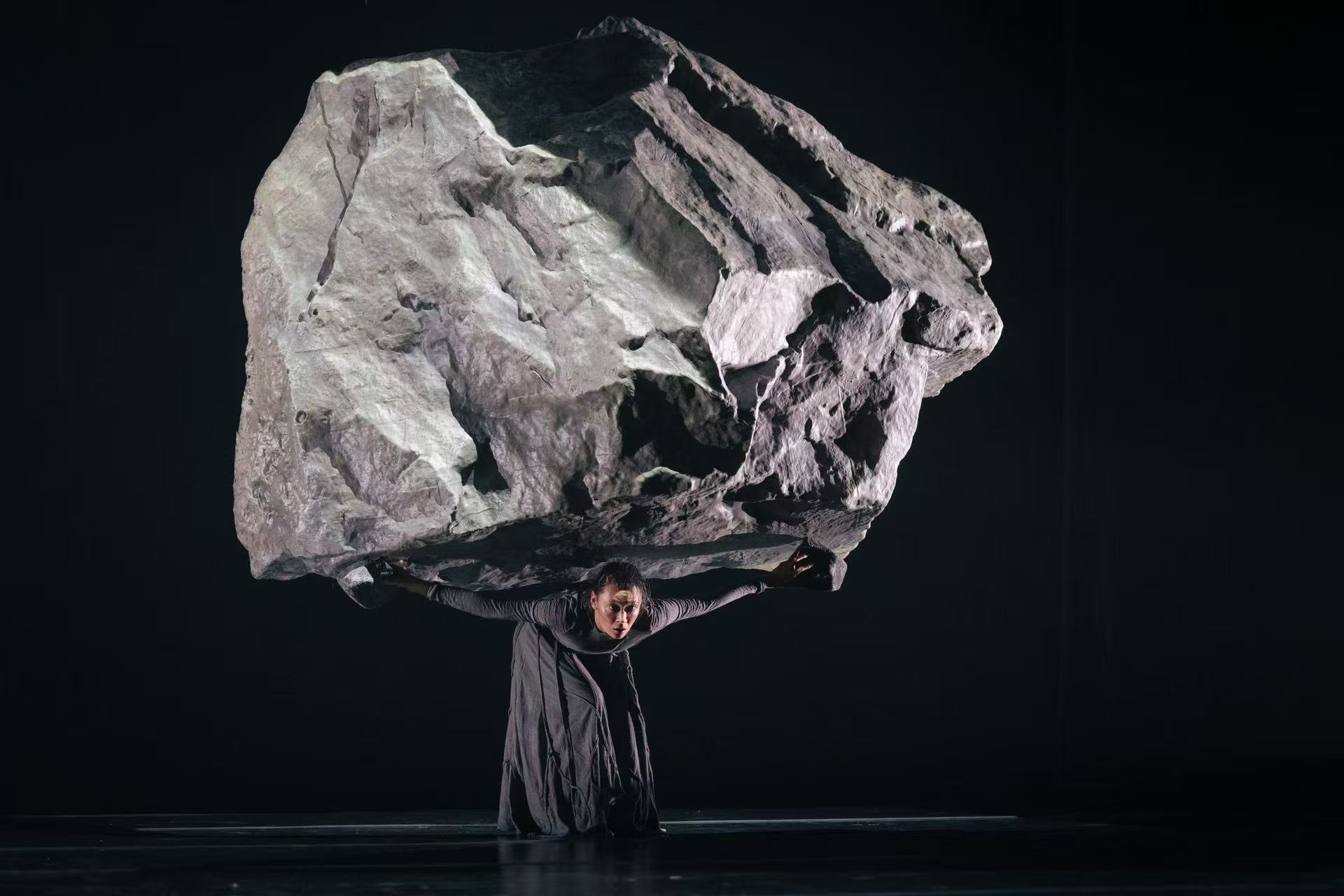
The great stone at the center of the stage is the work's most important bodily object. It is not scenery, but a presence that continually changes the dancer's relation to her body. The silence, hardness, and sense of time carried by stone become weight and resistance inside the body. The dancer circles it, bears it, approaches it, and is shaped by it in return. The work therefore moves from "speaking about origin" toward "experiencing origin through the body."
The mother's voice is also not background music. Dong Jilan's mother, Zhang Fumei, is an inheritor of Bai folk singing, and her singing brings life, labor, and local memory into the theatre. When the modern dancing body meets the mother's voice, tradition is not material pasted onto dance. It becomes the living site to which the dancer responds: on one side, a voice handed down by the mother; on the other, a body shaped by training, movement through the world, and creation.
For this reason, the "search for roots" in A Yang Bai is not a return to a stable folk label, nor a romanticization of the countryside. It is closer to a self-questioning within modern dance: why does the body move this way? Which memories have settled into muscle, bone, and breath? How can a dancer who has moved from village to world stage hear mother, stone, and land again through contemporary body language?
This is the central creative background of A Yang Bai: it uses modern dance as its method, and draws from the mother's voice, the temporality of stone, and personal life experience. What the work finally presents is not "how tradition is displayed," but how a modern body enters into relation with its own origin again.