1
Creative Background
The inspiration for Ba Wang Whip comes from the Bai folk dance of the same name. It is one of the most beloved and representative Bai folk dances, carrying Bai history, customs, festivals, and collective bodily memory. It represents optimism, simplicity, elegance, and vitality, while keeping a direct force from everyday folk life.
The 2018 work Ba Wang Whip does not move the traditional dance onto the stage unchanged. It is Dong Jilan's contemporary and personal interpretation of this tradition. Existing materials note that only a small number of Bai people still know the earliest version of Ba Wang Whip. The work therefore feels like a new breath given to a tradition as it gradually recedes.
The creative platform that supported the work was originally called Portraits in Otherness, which can be understood as a set of personal portraits. Akram Khan Company in the UK supported four young artists in making their own works. Dong Jilan was selected from China, while three other artists were selected from other countries. Each artist began from their own bodily experience and completed an independent work.
In this context, Ba Wang Whip is not a display of an ethnic label. It is Dong Jilan's active statement as a Bai dancer and creator about where she comes from. She places homeland, Bai folk dance, childhood memory, and international theatre experience inside one body, making "where I come from" the real center of the work.
2
Translating One Whip-Stick
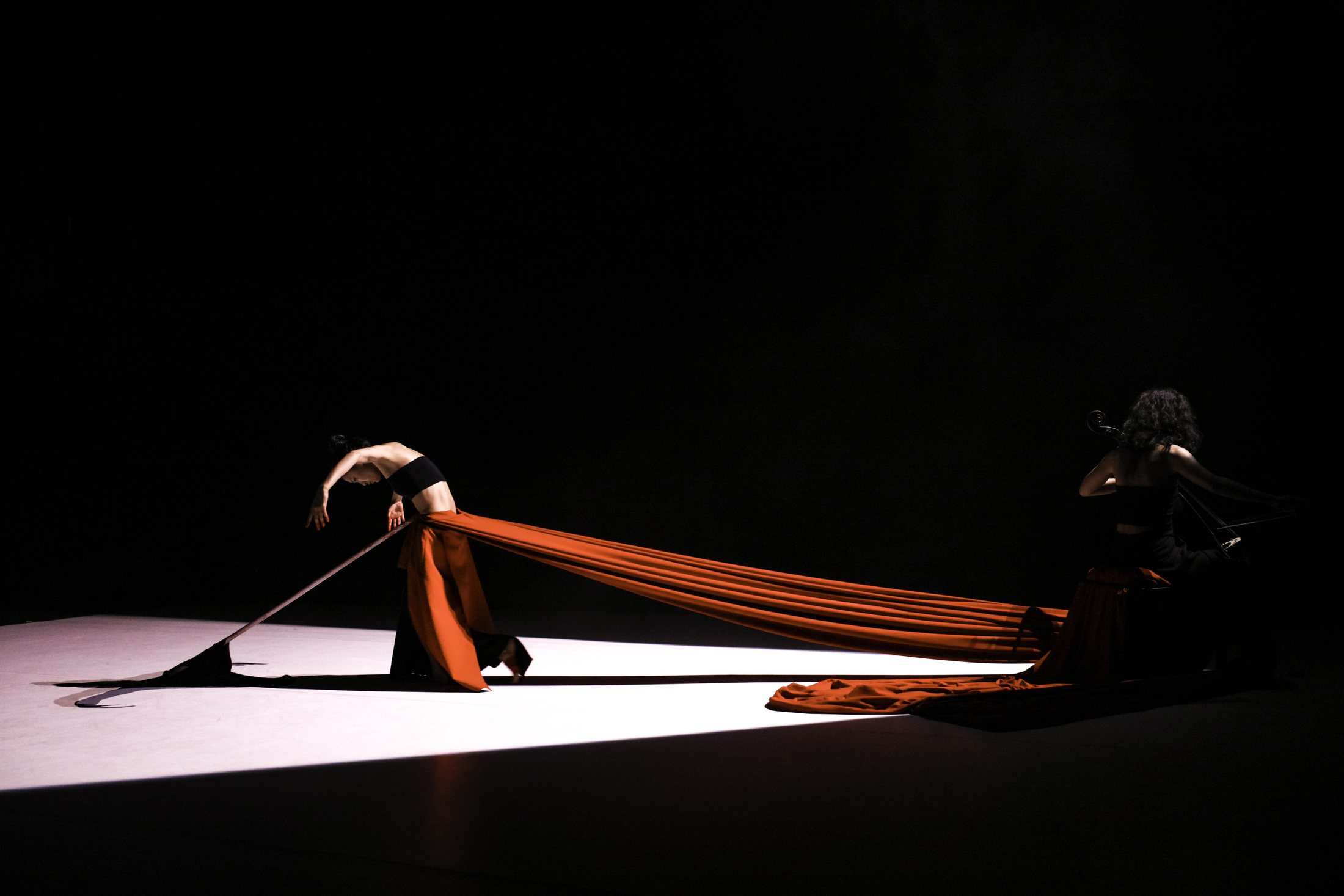
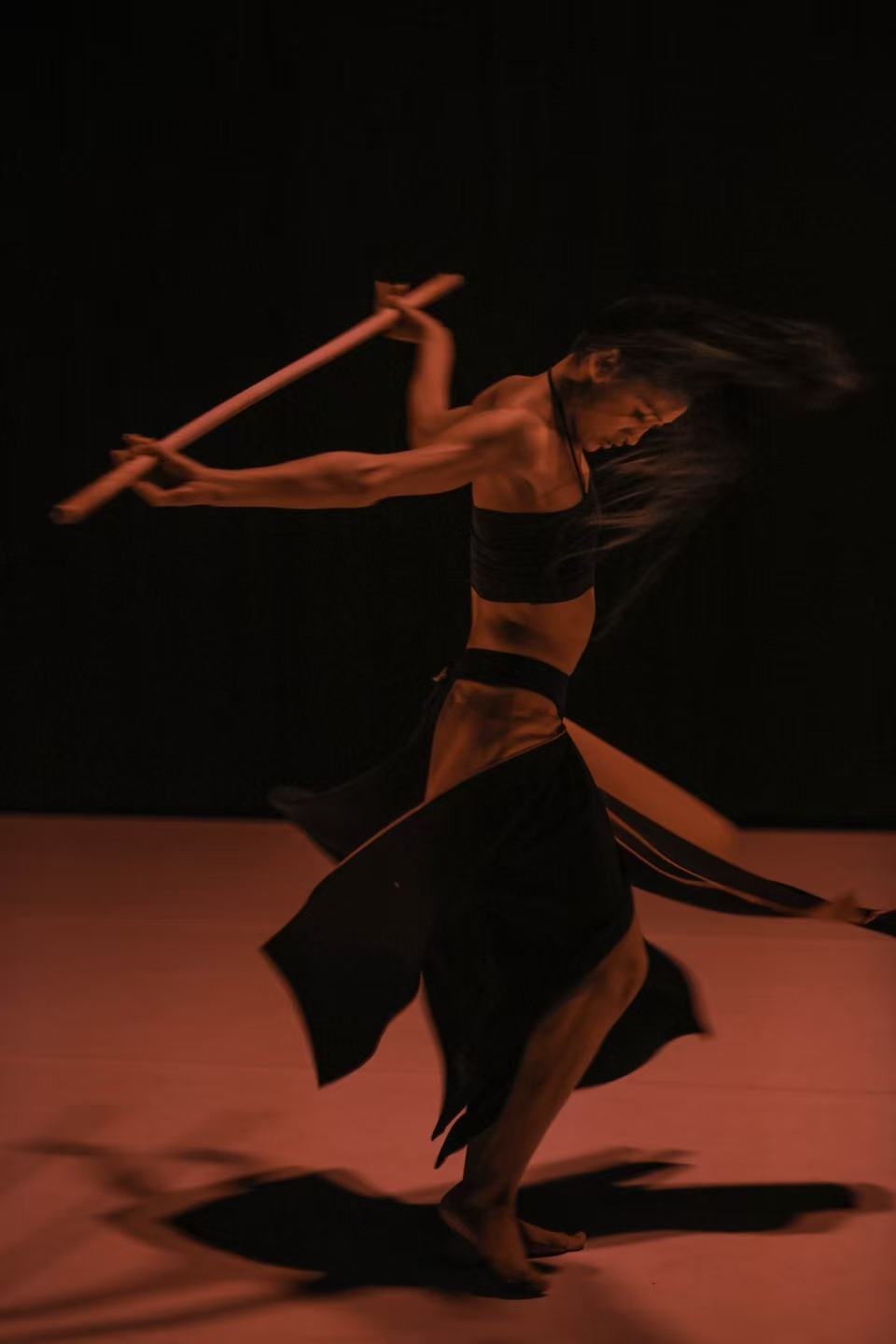
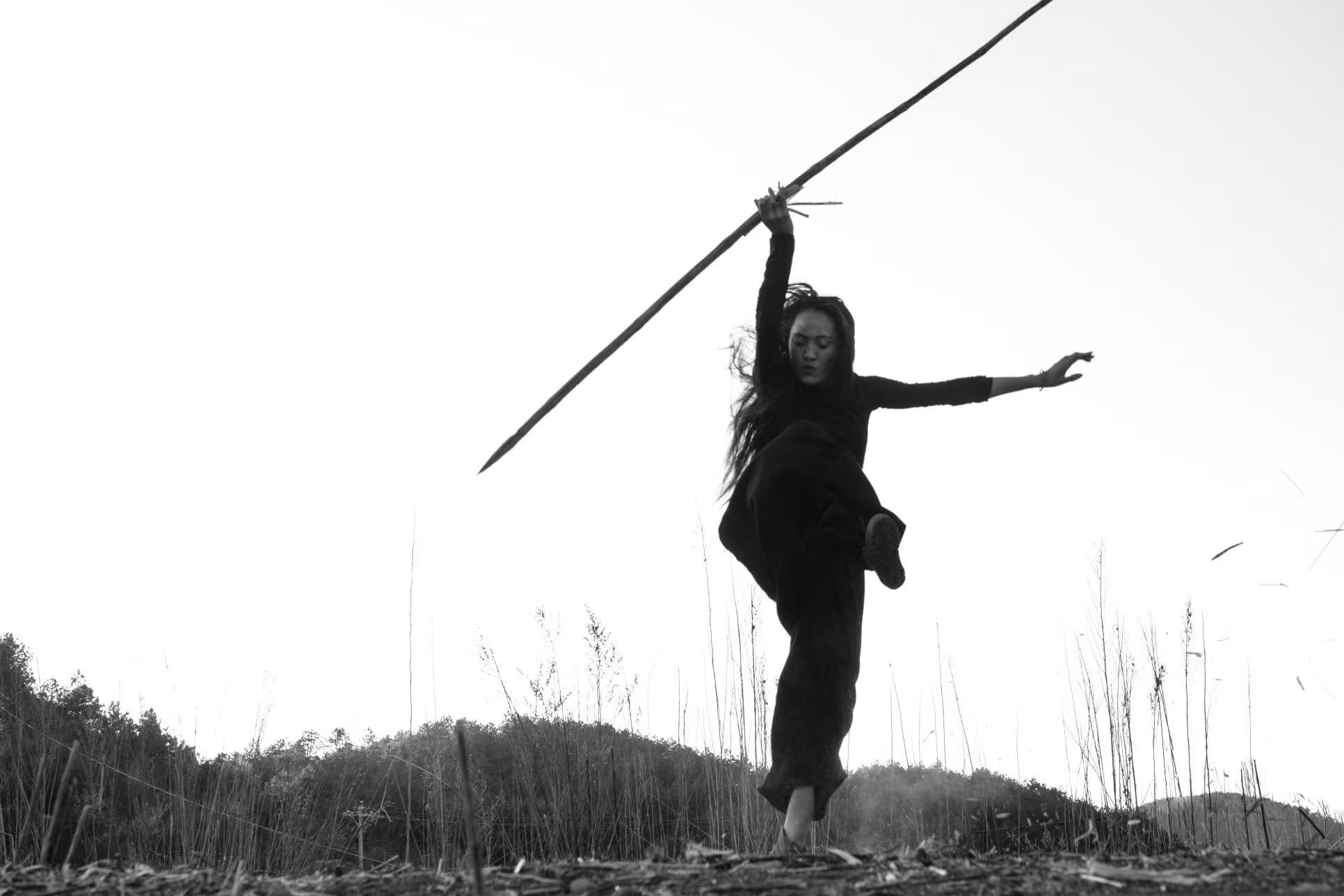
The whip-stick on stage is repeatedly simplified until it is no longer only a prop. It becomes almost an external spine. It can be held, dragged, struck, swung, and used as support when the body loses balance. On one hand, it keeps the rhythm and sound of folk dance; on the other, it enters contemporary dance's handling of weight, resistance, space, and time.
This stick places the body in a double state: it helps the dancer extend, but it also continually restricts the dancer. Each swing seems to summon tradition back; each pause seems to question tradition again. Dong Jilan is not making the body "perform Bai culture." She builds a pulling relation between body and stick. The more concrete the stick becomes, the heavier memory feels. The more abstract the movement becomes, the closer homeland feels.
3
Sound and Collaboration
Ba Wang Whip was also Dong Jilan's first collaboration with composer and performer Hong Yunran. The music does not simply sit beneath the movement. It joins the sound of the whip-stick, the breath of the body, and the silence of the space to form the work's rhythm. Folk Ba Wang Whip already has a strong sonic quality: strikes, bells, steps, and calls all give the movement an audible force.
In a cross-cultural collaboration, this sound becomes especially important. It allows the work to reach the audience through rhythm, breath, and bodily weight, without relying on extensive explanation of "Bai" or "Yunnan."
4
Realized Outcome
Ba Wang Whip was choreographed and performed by Dong Jilan, with music composed and performed by Hong Yunran. Costume design was by Mary Katrantzou, lighting design by Fabiana Piccioli, and production, creative consultation, and dramaturgy by Farooq Chaudhry. The work was supported by the China Shanghai International Arts Festival and Arts Council England.
The work appeared in 2018 in a project connected to Sadler's Wells in London and later toured internationally with success. In 2019, Dong Jilan was nominated for the Emerging Artist Award at the UK National Dance Awards for this work. Ba Wang Whip therefore became a crucial page in her personal creative history, truly connecting Bai folk dance, personal memory, and contemporary theatre.